
Blog
Swiss Young Academy SYA
Risks and opportunities: The Swiss Young Academy is driving the AI debate forward
The Swiss Young Academy has admitted six new members from a wide range of disciplines. They were officially welcomed at a ceremony in Bern on 12 June 2026. No sooner had they joined than they were actively contributing to a major debate on artificial intelligence (AI) in research. One key insight emerged: AI cannot replace scientific thinking.

They conduct research in the field of neuroscience, responsible corporate governance and English literature. They combine energy research with social science, work in science journalism and are developing methods at a biotechnology start-up to make disease biomarkers easier to detect: the six new members of the Swiss Young Academy – Adina Arth, Rodrigo Gacel Arzate Mejia, Vanja Djinlev, Anne Lüscher, Simone Pengue and Emily Louisa Smith – all come from different disciplines and work in different areas.
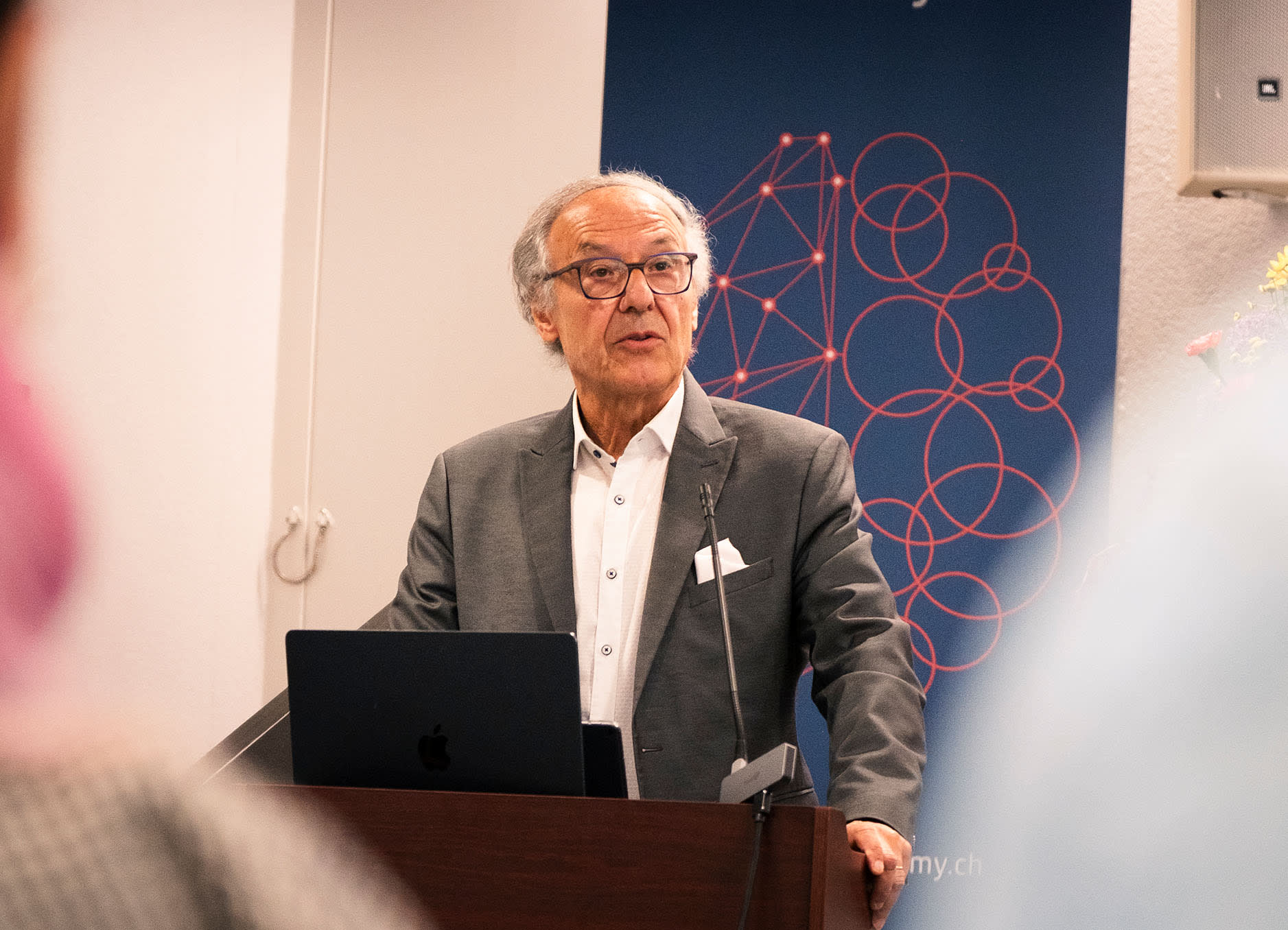
For Yves Flückiger, President of the Swiss Academies of Arts and Sciences, this is crucial: ‘When it comes to tackling the major challenges of our time, interdisciplinarity is more important than ever,’ he said in his opening address. The new members were elected following a competitive application process. At the ceremony, they briefly introduced themselves and received their membership certificates from Marianne Bonvin Cuddapah, Managing Director of the Swiss Academies of Arts and Sciences, and Karin Spycher, Head of the Swiss Young Academy. The Swiss Young Academy – the network for early career researchers – now has 29 members. The six new members will contribute to its work over the next five years.
Utopia or dystopia?
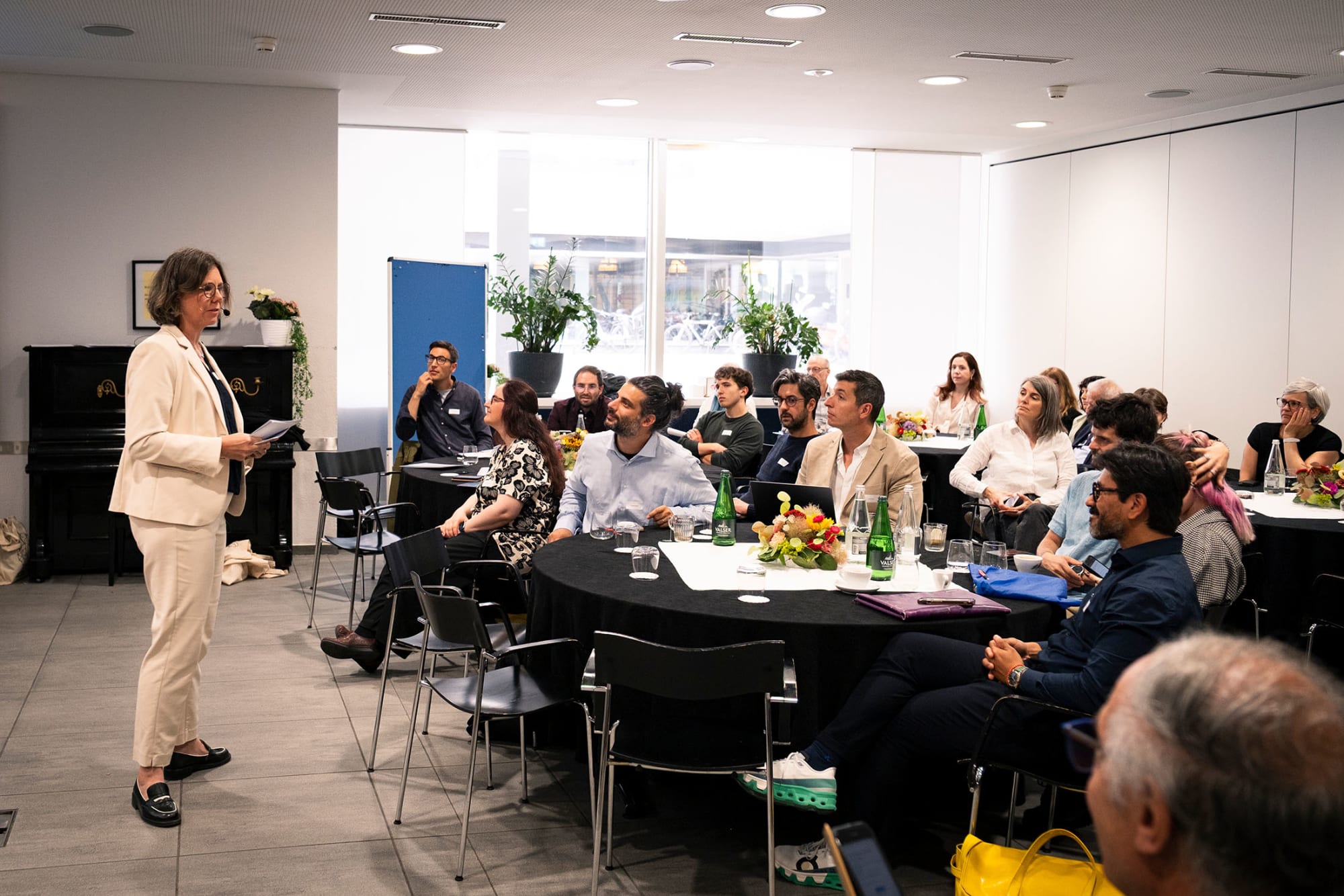
No sooner had they been admitted than they found themselves discussing a major topic together with around 30 other participants: artificial intelligence. According to a poll, most of those present use AI several times a week – mainly for translations, brainstorming and data coding. Because its members deal with AI in two capacities, both as researchers and teachers, the Swiss Young Academy published a critical reflection in December 2025. The booklet ‘Impact of AI on Early Career Researchers: Challenges, Opportunities and Responsibilities’ summarises the key aspects, ranging from everyday practice to environmental issues. The aim is to enable an informed discussion.
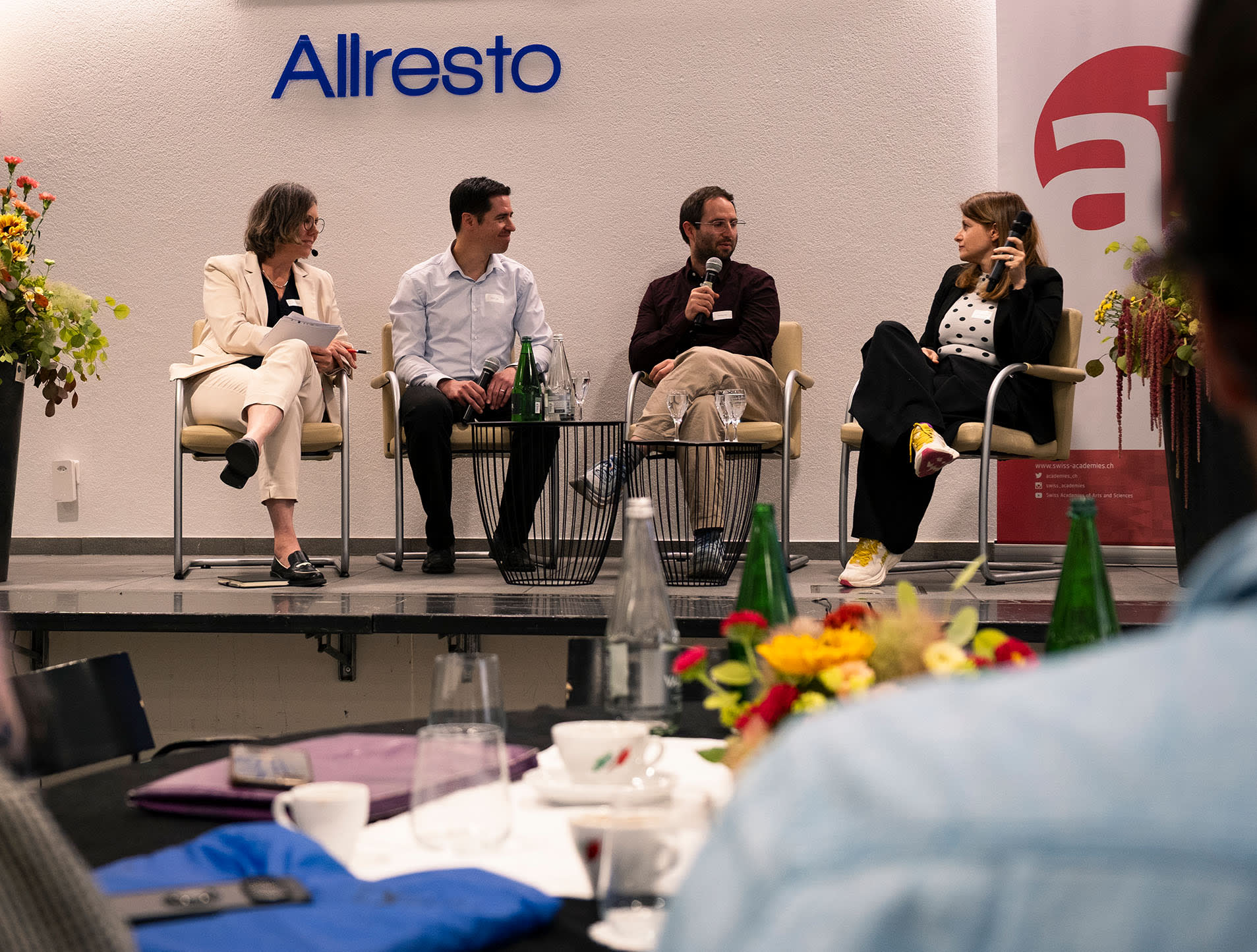
Where is AI genuinely useful? Are researchers losing their ability to think critically? Does diversity suffer when AI is used in peer review – or does AI correct the self-interests of fellow researchers? What about transparency, dependencies and regulation? The participants explored these questions in small groups and in a panel discussion with three experts. The responses were cautious, particularly with regard to the long-term consequences of using AI. One participant posed the burning question: ‘At the current pace, are we heading towards a utopia or a dystopia?’
Greater speed, greater quality?
The participants agreed that AI makes literature searches, data analysis and academic writing more efficient. Whether it also improves the quality of research ‘depends on the discipline’, said Emmanuel Senft, Head of the Human-centered Robotics and AI Group at the Idiap Research Institute in Martigny and – as a member of the Swiss Young Academy – the lead author of the aforementioned booklet. He cited protein research as an example: AI enables researchers to predict the structures of far more proteins much more quickly. This improves understanding and helps to advance fields such as drug development.
Sarah Dégallier Rochat, Head of the strategic thematic field Humane Digital Transformation at Bern University of Applied Sciences, gave an example from the creative process: researchers let AI take on the role of reviewer and receive almost immediate feedback on the strengths and weaknesses of a manuscript. Of course, the result must still be critically reviewed, she stressed. Some of it will be relevant, some of it useless: ‘But the process is similar to having a colleague read your work – only more efficient,’ she explains.
The members of the Swiss Young Academy also saw benefits in high-quality translation tools: they make content accessible to more researchers and students, which encourages broader participation. In science communication, AI can help present complex findings in an accessible way. This strengthens the link between science and society.
‘Black box’ – a nightmare for science
But the discussion also showed that the benefits of AI come with serious risks. Some large, well-known AI systems resemble a ‘black box’, meaning the path they take to arrive at their results cannot be traced. This poses a problem for science. Furthermore, it is often unclear what data the models were trained on, and biases may also be present. Researchers should therefore favour open-source models. The fact that knowledge production is becoming increasingly dependent on AI tools also creates risks, especially when they are owned by private tech companies.
Large amounts of funding for AI research are now flowing into the private sector. According to the panel, publicly funded research could set itself apart by developing transparent, more sustainable models – on a smaller scale, but with reliable data and optimised algorithms. Global collaboration is crucial in this respect, emphasised Manuel Kugler, Programme Manager Data & AI and Advanced Manufacturing at the Swiss Academy of Engineering Sciences (SATW). Emmanuel Senft suggested that public research could focus more strongly on the social impacts of AI.
AI and the pressure to produce
Those present were critical of the likely increase in the pressure to produce: more AI, more efficiency, more publications and more funding applications. ‘This floods the system and further increases the workload in the research cycle,’ said Manuel Kugler. Those who fail to keep up with the output fall behind – but greater volume does not automatically mean greater quality. On the contrary: ‘AI can also be used to produce more nonsense more quickly.’ The research system must address this issue.
Sarah Dégallier Rochat called for a rethink of the rules used to assess academic performance. The AI effect, she argued, reinforces a system that is already focused on quantity and in which publication numbers and citations count. This makes international initiatives such as DORA and CoARA all the more important: they aim to move away from metrics and towards more qualitative forms of assessment. The small-group discussions also included calls to redefine research quality and preserve space for slower, more reflective research as a priority.
No false reverence
At the end of the panel discussion, moderator Astrid Tomczak-Plewka asked the key question: ‘What do researchers do when AI takes over thinking, i.e. their core task?’ The experts answered without hesitation. ‘AI doesn’t think,’ said Sarah Dégallier Rochat. It simulates thinking impressively well, even if it does sometimes make mistakes. The expert said we should not allow ourselves to be overly impressed by this. Her discipline, mathematics, has been using tools to solve problems for decades: ‘That did not make us redundant.’ With AI, it is ‘the execution of processes, not thinking’, added Emmanuel Senft. Researchers themselves can decide how to use it wisely.
The consensus of the afternoon was clear: AI does not replace scientific thinking. It remains a tool that extends human capabilities. But human control and decision-making remain essential. The members of the Swiss Young Academy see their role as promoting ‘critical, ethical and responsible’ AI practices – primarily through teaching and mentoring. Emmanuel Senft finished by looking ahead: ‘Let us not only ask what role AI plays today – let us also consider where we want to be with it in ten to fifteen years.’